Helping people make more informed decisions in the supermarkt, utilising Jumbo's new scanner
This project was part of my time as a Communication and Multimedia Design student. It was my graduation project. I was responsible within this project for: Concept Development, Exploratory Research, UX Design, Visual Design and User Testing

For my graduation project, I wanted to explore the challenge of choosing the ‘right’ product in a supermarket. It was something that I saw (and still see) people struggling with in my own environment.
Researching this topic quickly showed me that a solution in the supermarket would be really interesting to explore. There’s a lot of information and marketing screaming at you in the supermarket, so it can be hard to make a choice that feels good.
I reached out to a couple of parties to further explore this direction and came in contact with Jumbo Supermarkten. They themselves were already figuring out how to help people with making the right choices in their supermarket, so this was a perfect fit.
A device that was still relatively unexplored for them was their scanner. It’s a device that is used quite often but had very limited functionality at that point. New versions of the scanners were in production, with bigger screens that also supported touch. So we had the idea to take my challenge and see what role those new scanners could play.
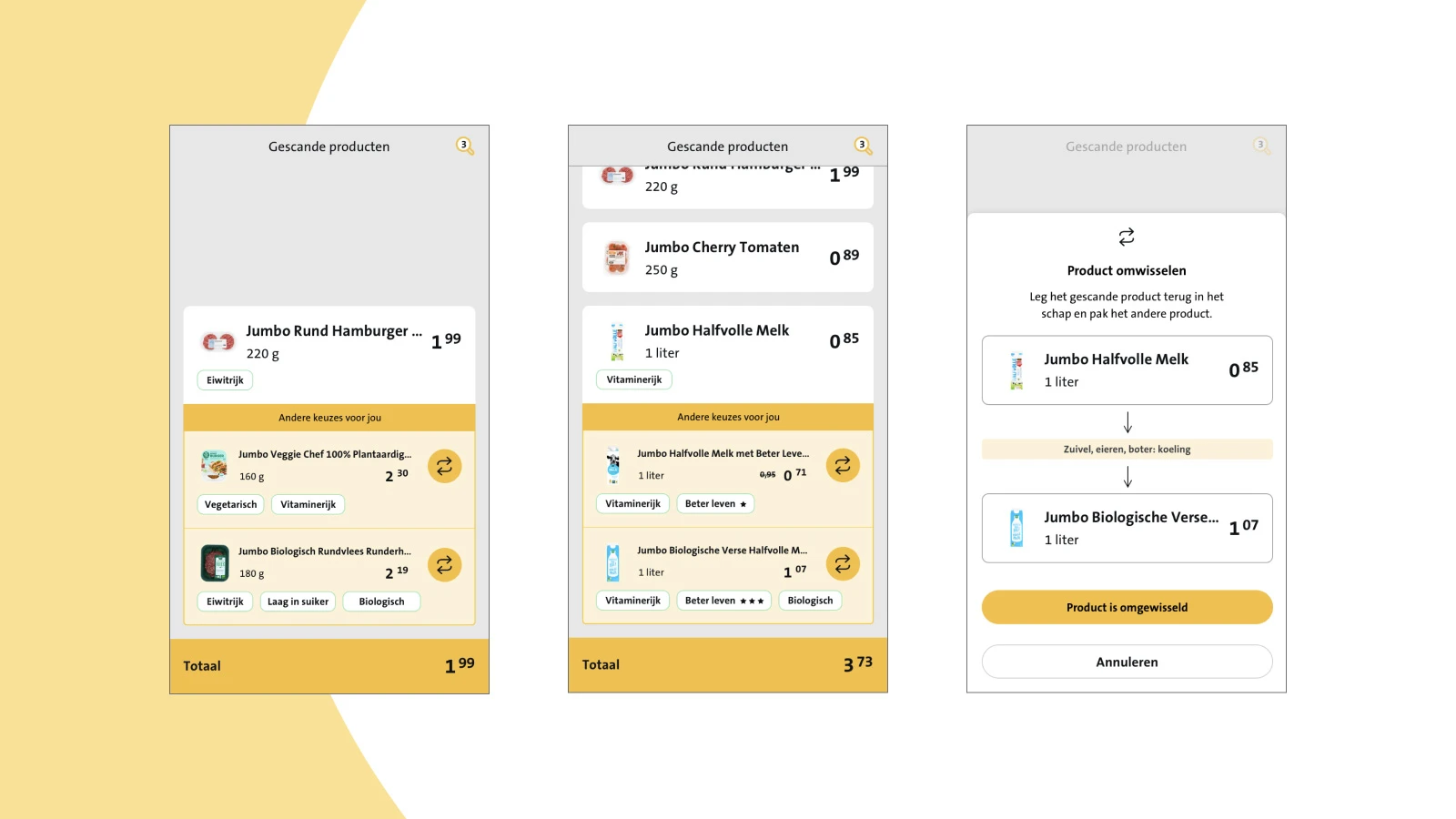
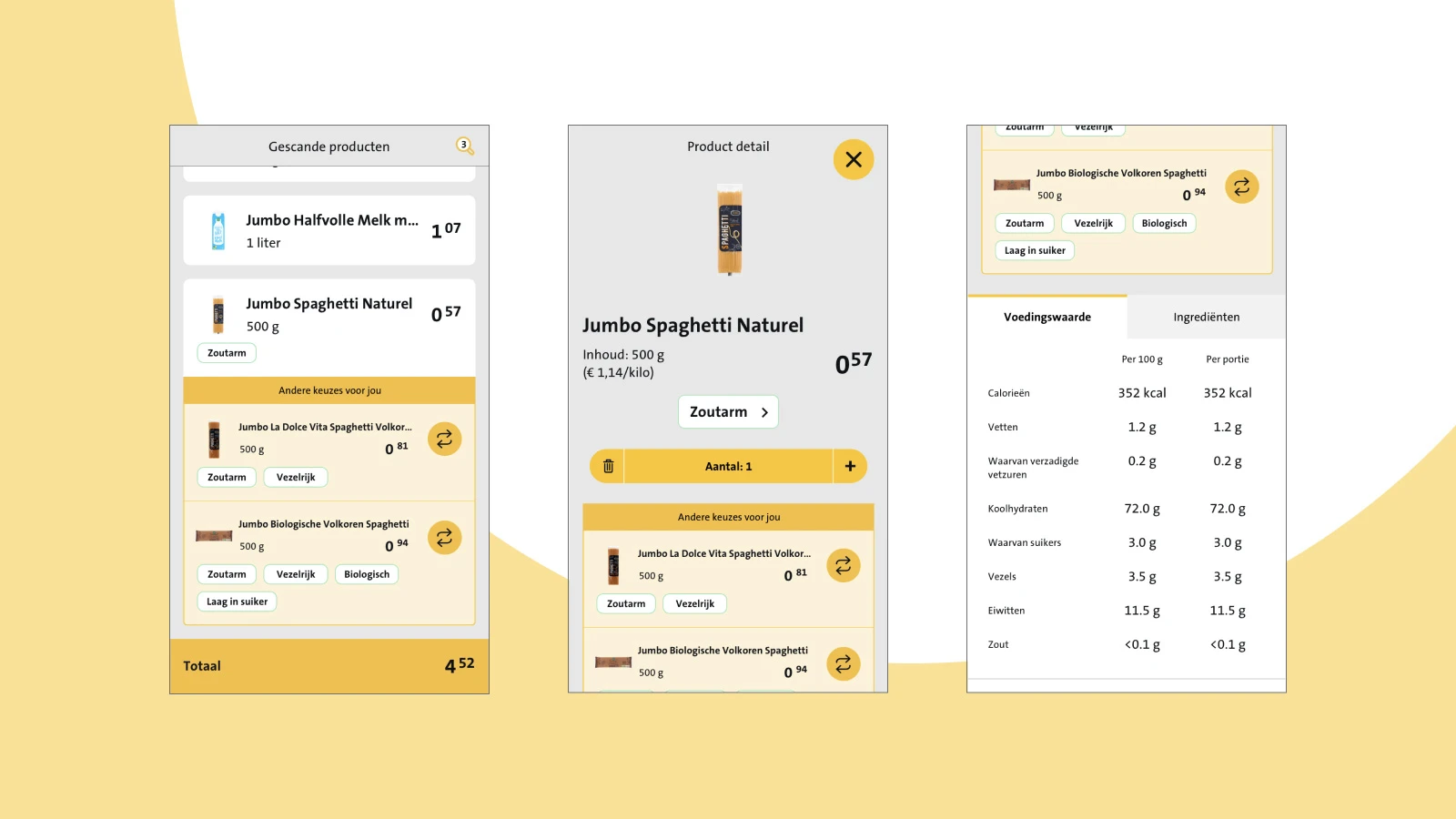
Exploring and testing different ways of helping people in their choices, led to some interesting insights. Base on these insights, one big challenge came up; how do we give the customer suggestions, without being pedantic.
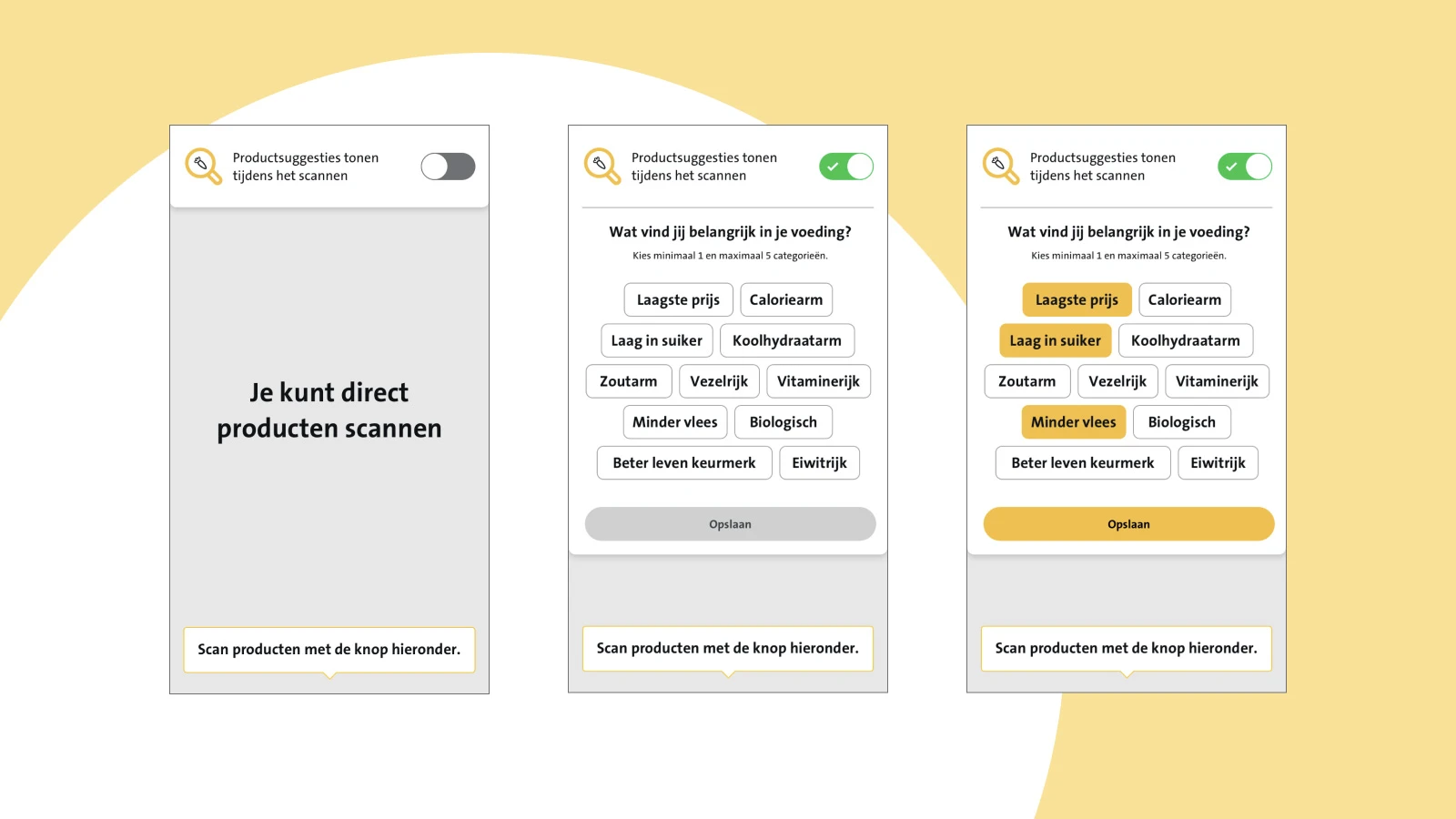
This was translated to the concept by giving the customer the initial control. They select what they find important factors in choosing products, such as ‘low in sugar’ or ‘low-salt’.
This concept was also tested in the context of a Jumbo supermarket. It was experienced as really interesting. Of course price still plays a big role, but when participants were provided with a ‘better’ solution that was also cheaper, the choice was easy.